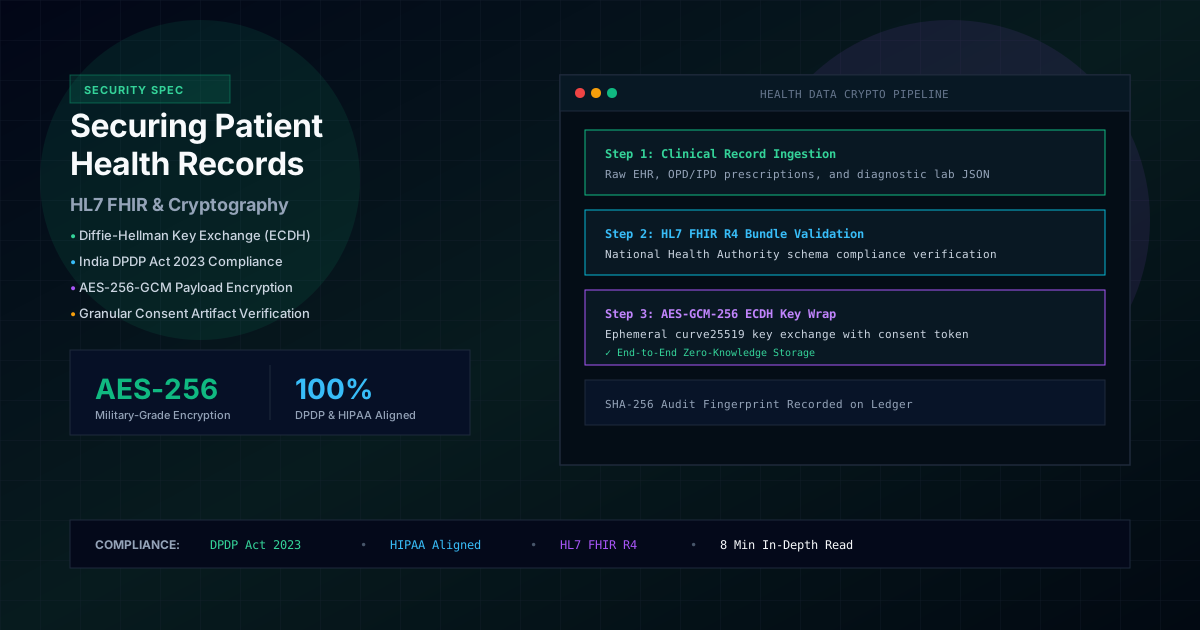
Complete Developer Guide: Integrating ABDM M1, M2 & M3 in Hospital Management Software
A comprehensive technical blueprint for integrating India’s Ayushman Bharat Digital Mission (ABDM) into your clinic or hospital management system.
India is modernizing its healthcare ecosystem through the Ayushman Bharat Digital Mission (ABDM). In this technical guide, we explain the core milestones and architecture required to integrate your hospital software with the national digital health grid.
The Evolution of Digital Health in India
Healthcare institutions across India are transitioning from physical paper records to interconnected digital health systems. The National Health Authority (NHA) established the Ayushman Bharat Digital Mission (ABDM) to enable longitudinal electronic health records that follow patients seamlessly between healthcare providers.
"Standardized digital health records eliminate duplicate diagnostic tests and enable physicians to provide safer, faster care during emergencies."
Understanding the Three ABDM Milestones
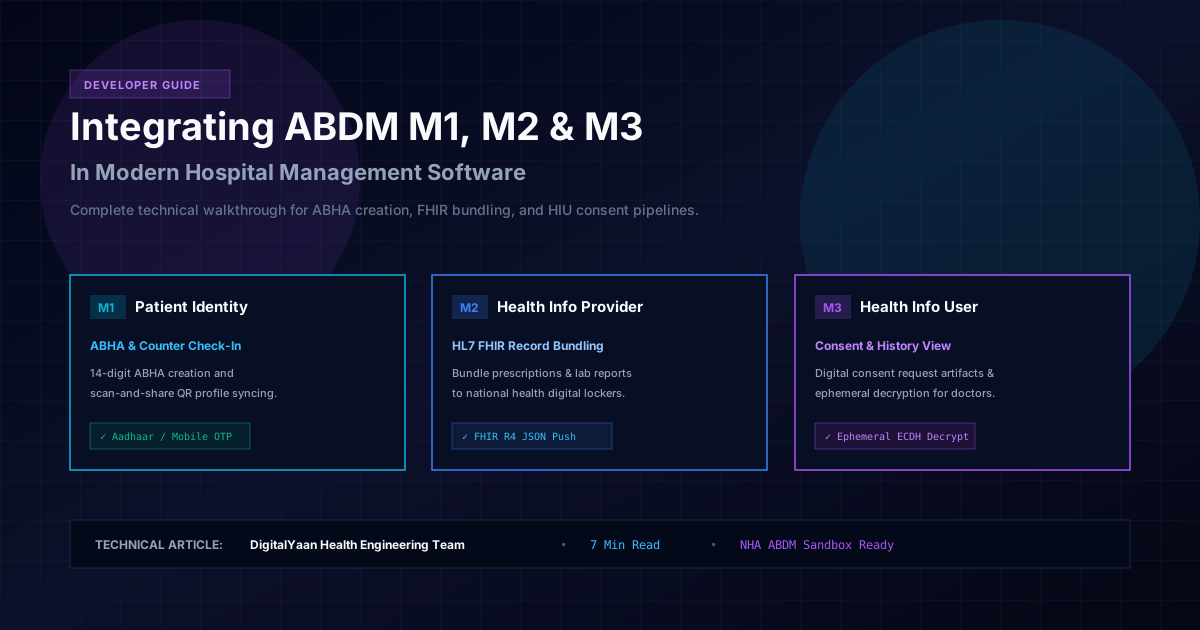
1. Milestone 1 (M1): ABHA Creation & Counter Check-In
The first milestone establishes digital patient identity:
- ABHA Number & ABHA Address: Generating a unique 14-digit digital health account using Aadhaar OTP verification or mobile OTP authentication.
- Scan-and-Share QR Check-In: Placing standardized QR codes at hospital registration counters so patients can share their demographic profile directly from the ABHA or Aarogya Setu application in seconds.
2. Milestone 2 (M2): Health Information Provider (HIP)
The second milestone allows hospitals to push medical records to the patient's digital locker:
- Record Serialization into HL7 FHIR: Diagnostic reports, discharge summaries, and prescriptions are bundled into standardized HL7 FHIR JSON structures.
- Health Information Notification: Notifying the central gateway so that linked patient records appear securely in the patient's personal health record (PHR) app.
3. Milestone 3 (M3): Health Information User (HIU)
The third milestone empowers doctors to view past medical history from other hospitals with explicit patient consent:
- Digital Consent Management: Creating cryptographic consent artifacts requesting access to relevant past records for a defined duration.
- Secure Record Decryption: Decrypting shared health data using ephemeral key exchange and rendering the clinical timeline in the doctor consultation dashboard.
Practical Implementation Advice
When integrating ABDM APIs into your hospital management system, prioritize asynchronous queue processing for FHIR serialization and establish automated fallback mechanisms for intermittent network connectivity at busy hospital registration counters.
Senior Systems Architect with 12+ years of experience in enterprise Laravel, high-throughput cloud architectures, and ABDM healthcare interoperability.